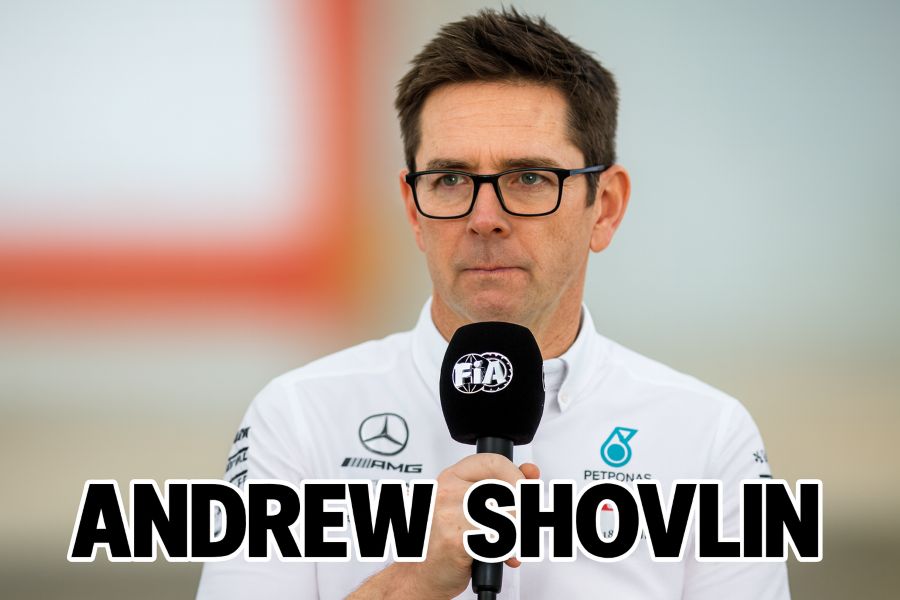
andrew shovlin
introduction to andrew shovlin
When people talk about Formula One success, they usually focus on drivers, team principals, or headline designers. Much less attention is paid to the engineers who translate raw performance into race-winning results on Sunday afternoon. One of the most influential figures in that category is andrew shovlin, a senior Mercedes Formula One engineer whose work has shaped race strategy, car operation, and team decision-making for more than a decade.
Understanding his role helps explain why Mercedes dominated the hybrid era and why engineering leadership matters as much as outright speed. This article looks at his background, responsibilities, technical philosophy, and long-term impact on Formula One, with an emphasis on how things actually work behind the scenes rather than surface-level storytelling.
Early Engineering Background and Path into Formula One
Andrew Shovlin’s route into Formula One followed a classic engineering pathway rather than a media-friendly narrative. He studied mechanical engineering in the UK, developing a strong foundation in thermodynamics, vehicle dynamics, and systems analysis. These disciplines are not abstract in Formula One; they directly affect how cars are designed, simulated, and raced.
Before joining Mercedes, he worked within the motorsport engineering ecosystem, gaining experience that blended theoretical knowledge with applied race engineering. This early exposure taught him a key lesson that still defines his approach: performance is rarely about a single breakthrough. It is about marginal gains, consistency, and decision-making under pressure.
When he joined Mercedes (then transitioning from its earlier forms into a full works operation), the team was investing heavily in data-driven engineering. Simulation tools, race modeling, and cross-department integration were becoming central to performance. Shovlin’s analytical mindset aligned perfectly with this direction.
At this stage, Formula One engineering was evolving rapidly. Hybrid power units, complex aerodynamics, and real-time data analysis were redefining how races were won. Engineers who could connect simulation results with track-side execution were becoming invaluable, and that is where Shovlin began to stand out.
Role Within Mercedes AMG Petronas Formula One Team
Within Mercedes, Andrew Shovlin rose to become Trackside Engineering Director, a role that sits at the intersection of factory development and race weekend execution. This position is often misunderstood. It is not about designing parts directly, but about making sure the entire car operates optimally during practice, qualifying, and the race.
He oversees groups responsible for car setup, performance analysis, reliability assessment, and race support. Every decision about suspension settings, tyre usage, cooling trade-offs, and power unit modes passes through this engineering layer. The goal is to extract the maximum performance while staying within regulatory and reliability limits.
On a race weekend, this role becomes extremely time-sensitive. Engineers must interpret practice data, correlate it with simulation predictions, and decide which direction to take before parc fermé conditions lock in the setup. Mistakes here can ruin an entire weekend, regardless of how fast the car is on paper.
Shovlin’s influence is particularly visible during strategy calls. While dedicated strategy teams crunch numbers, trackside engineering provides real-world context: tyre degradation feel, driver feedback, wind changes, and unexpected behavior. The final call is always a blend of math and engineering judgment.
Engineering Philosophy: Why Mercedes Was Consistently Competitive
Mercedes’ long period of dominance was not an accident, and it was not purely down to engine performance. One of the defining aspects of their success was operational excellence, something Andrew Shovlin consistently emphasized.
His philosophy centers on correlation. In Formula One, correlation means that what you see in simulation, wind tunnels, and driver-in-the-loop models must match what happens on track. When correlation is strong, engineers can make confident decisions quickly. When it is weak, teams waste time chasing false solutions.
Another core principle is systems thinking. A Formula One car is not a collection of independent parts. Aerodynamics affect tyre temperatures, which affect grip, which affect energy recovery deployment. Shovlin’s approach treats the car as an integrated system rather than isolated performance areas.
This mindset also applies to people. Mercedes became known for clear communication between departments. Trackside engineers, factory analysts, and drivers worked from the same data assumptions. That alignment reduces errors and speeds up learning, especially during regulation changes.
Finally, risk management plays a key role. Formula One rewards bold decisions, but only when risks are understood. Under Shovlin’s leadership, Mercedes often chose conservative strategies when championship context demanded it, while still pushing aggressively when upside outweighed downside. andrew shovlin
Trackside Decision-Making and Race Execution
Race execution is where engineering theories are tested in real time. During a Grand Prix, Andrew Shovlin sits on the pit wall or in the trackside engineering center, monitoring live telemetry, weather models, tyre data, and competitor behavior. andrew shovlin
One of his main responsibilities is balancing short-term gains against long-term consequences. For example, pushing harder on a set of tyres may gain track position but risk thermal degradation later. Similarly, aggressive engine modes can offer lap time but increase reliability risk. andrew shovlin
These decisions are rarely obvious. Formula One cars operate at the limit of multiple constraints simultaneously. Shovlin’s role is to weigh probabilities rather than chase perfect outcomes. This is why Mercedes was often praised for making the “least wrong” decision in chaotic races.
Communication with drivers is another critical element. Engineers must translate complex data into simple, actionable instructions. Drivers need to know what to do, not why a model predicts a certain outcome. Clear communication builds trust, which in turn improves execution under pressure.
This skill became especially important during safety car periods and changing weather conditions. Rapid scenario evaluation, combined with calm leadership, often allowed Mercedes to capitalize when rivals hesitated.
Relationship with Drivers and Feedback Integration
Top-level drivers demand precise, evidence-based explanations. Andrew Shovlin developed strong working relationships with drivers like Lewis Hamilton and Valtteri Bottas by grounding discussions in data while respecting driver intuition.
Driver feedback is subjective by nature, but it is still valuable. The challenge is converting that feedback into measurable engineering changes. Shovlin’s teams focused on identifying patterns: if a driver reports instability at corner entry, engineers look for corresponding telemetry signals rather than dismissing or overvaluing the comment.
This feedback loop improves car setup over a race weekend. Small changes in brake migration, differential settings, or suspension balance can transform driver confidence, which then translates into lap time consistency.
Over time, this process builds mutual respect. Drivers trust engineers to listen and respond intelligently, while engineers trust drivers to provide accurate, repeatable feedback. This alignment was a quiet but powerful strength of Mercedes during its most successful years.
Navigating Regulation Changes and Technical Challenges
Formula One regulation changes often reset competitive order. Engineers who can adapt quickly gain a major advantage. Andrew Shovlin played a key role in guiding Mercedes through several major technical transitions, including aerodynamic overhauls and cost cap implementation.
The ground-effect regulations introduced in the early 2020s posed new challenges. Porpoising, ride height sensitivity, and narrow setup windows required a different engineering approach. Shovlin publicly acknowledged when Mercedes struggled, emphasizing learning and data-driven development rather than excuses.
This transparency reflected his engineering mindset. Problems are defined, measured, and solved systematically. Emotional reactions or blame-shifting do not improve lap time.
Cost caps added another layer of complexity. Decisions now had financial consequences as well as performance implications. Shovlin’s experience helped prioritize upgrades that delivered the highest return on investment, reinforcing the idea that modern Formula One is as much about resource management as raw innovation.
Influence Beyond Mercedes and Industry Reputation
Within the paddock, Andrew Shovlin is respected as a technical authority rather than a media figure. His interviews are often analytical, focused on explaining causes rather than defending outcomes. This approach has made him a trusted voice for fans who want to understand how Formula One actually works.
His influence extends beyond one team. Concepts around simulation correlation, integrated engineering groups, and disciplined race execution have become benchmarks across the grid. Other teams study Mercedes not just for car design but for operational processes.
Young engineers entering Formula One often cite Mercedes’ structure as an example of how modern teams should function. Shovlin’s career demonstrates that leadership in motorsport engineering is about clarity, consistency, and long-term thinking rather than individual brilliance.
Common Questions People Ask About Andrew Shovlin
Many fans ask what exactly his job involves compared to a technical director. The simplest answer is that he focuses on making the car perform during race weekends, while technical directors concentrate on design and long-term development.
Another common question is whether he makes strategy calls. Strategy is collaborative, but his input is critical because it connects data models with real-world behavior. Without trackside engineering context, strategy models are incomplete.
People also wonder why engineers like Shovlin are rarely in the spotlight. The reality is that Formula One culture values collective success. Engineers often prefer staying out of headlines, letting results speak instead.
Finally, some ask whether his approach would work at other teams. The principles he follows are universal, but success depends on organizational support. Engineering philosophy must align with team culture to be effective.
Long-Term Legacy in Formula One Engineering
Assessing legacy in Formula One requires looking beyond championships. Andrew Shovlin’s contribution lies in how he helped define a modern engineering role that blends data science, mechanical understanding, and leadership.
He represents a generation of engineers who operate comfortably across simulation environments and physical trackside realities. This hybrid skill set is now essential as Formula One cars become more complex and margins tighter. andrew shovlin
His calm, analytical communication style has also influenced how teams engage with fans and media. Explaining failures honestly while outlining solutions builds credibility, both internally and externally.
As Formula One continues to evolve, the systems and processes he helped refine will remain relevant. That is the mark of lasting impact: shaping how work is done, not just collecting trophies. andrew shovlin
Conclusion: Why Andrew Shovlin Matters to Formula One
Andrew Shovlin may not be a household name, but his work has quietly shaped one of the most successful eras in Formula One history. By focusing on correlation, system integration, and disciplined execution, he helped turn potential into performance.
His career shows that winning in Formula One is not just about speed. It is about understanding complexity, managing uncertainty, and making the right decisions at the right time. For anyone interested in how modern motorsport engineering truly works, studying andrew shovlin offers valuable insight.
About the Author